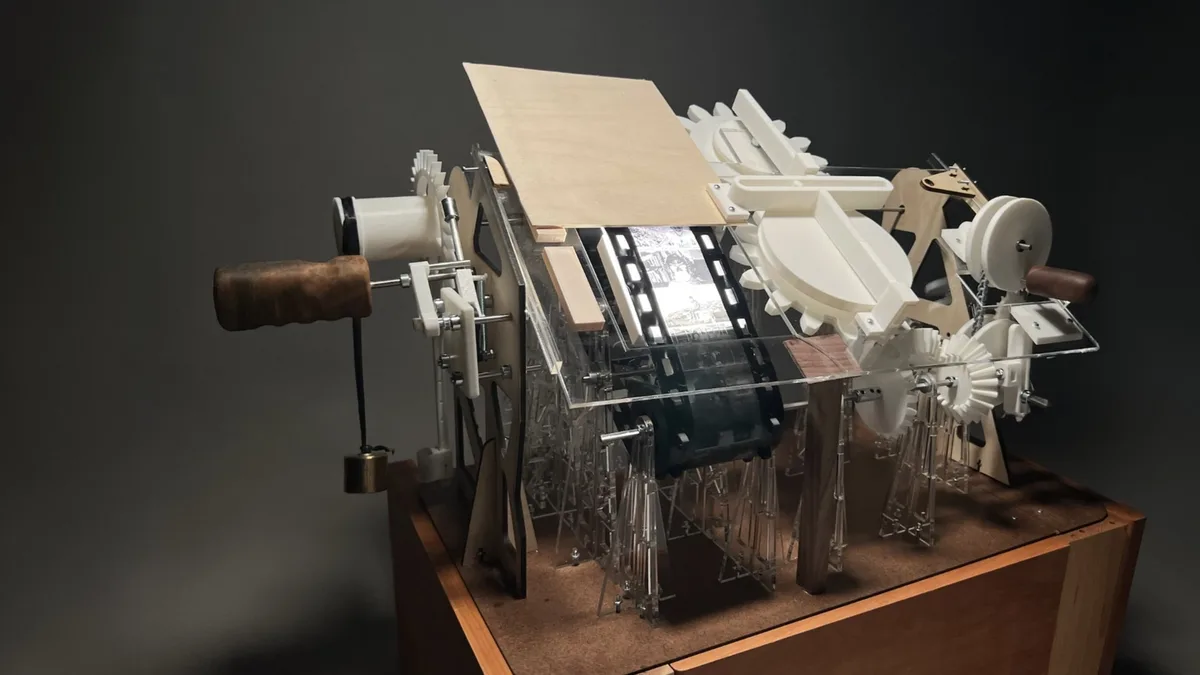
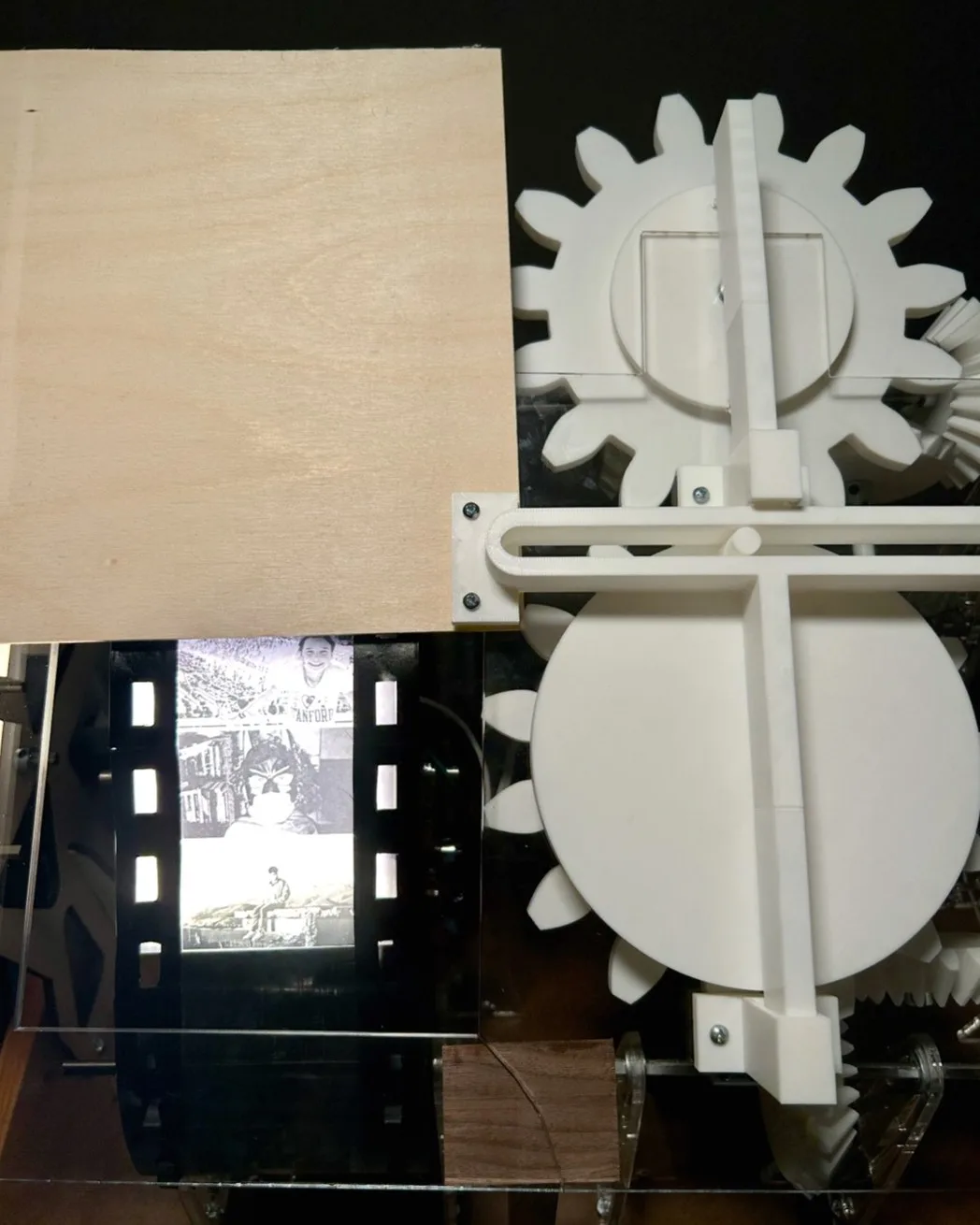
Memento is a working timepiece powered by a falling weight and regulated by an escapement. Instead of numbers, it shows time through childhood photographs on a rotating film strip. As the weight descends, a door lifts slowly to reveal the film, then snaps shut. A wooden touchpoint reverses the film, so memories replay forward or backward.
← All projects
Memento
A gravity-powered machine that reveals the passage of time through memories on a moving film strip.
Overview
Challenge
We began with one question: what happens if we reimagine a timepiece as an analogue machine? Early concepts used a rotating photo cylinder with slamming doors, but a 4-bar linkage made the machine too complex. The challenge was turning a feeling into motion with simple mechanisms that one falling weight could drive.
“We experience time through flashing memories—flashes of pictures that appear slowly and disappear fast.”
Process
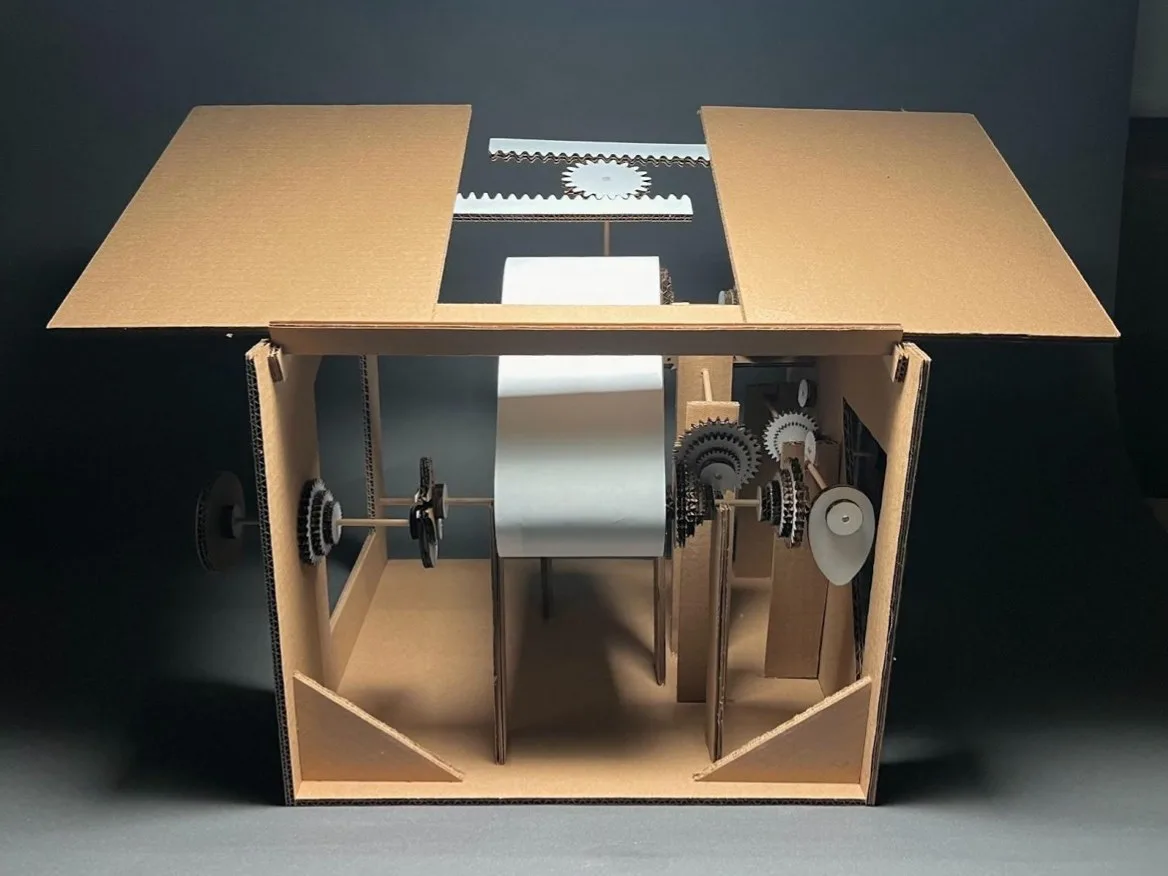
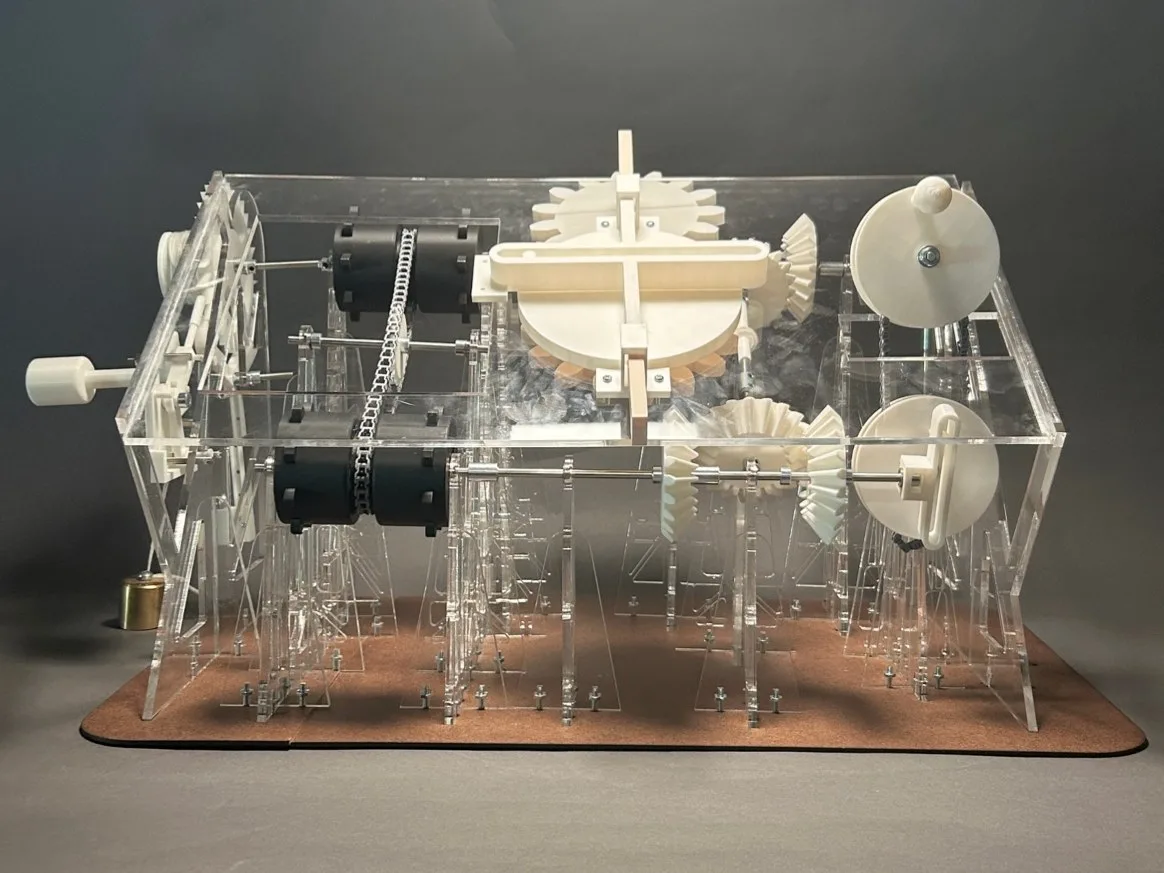
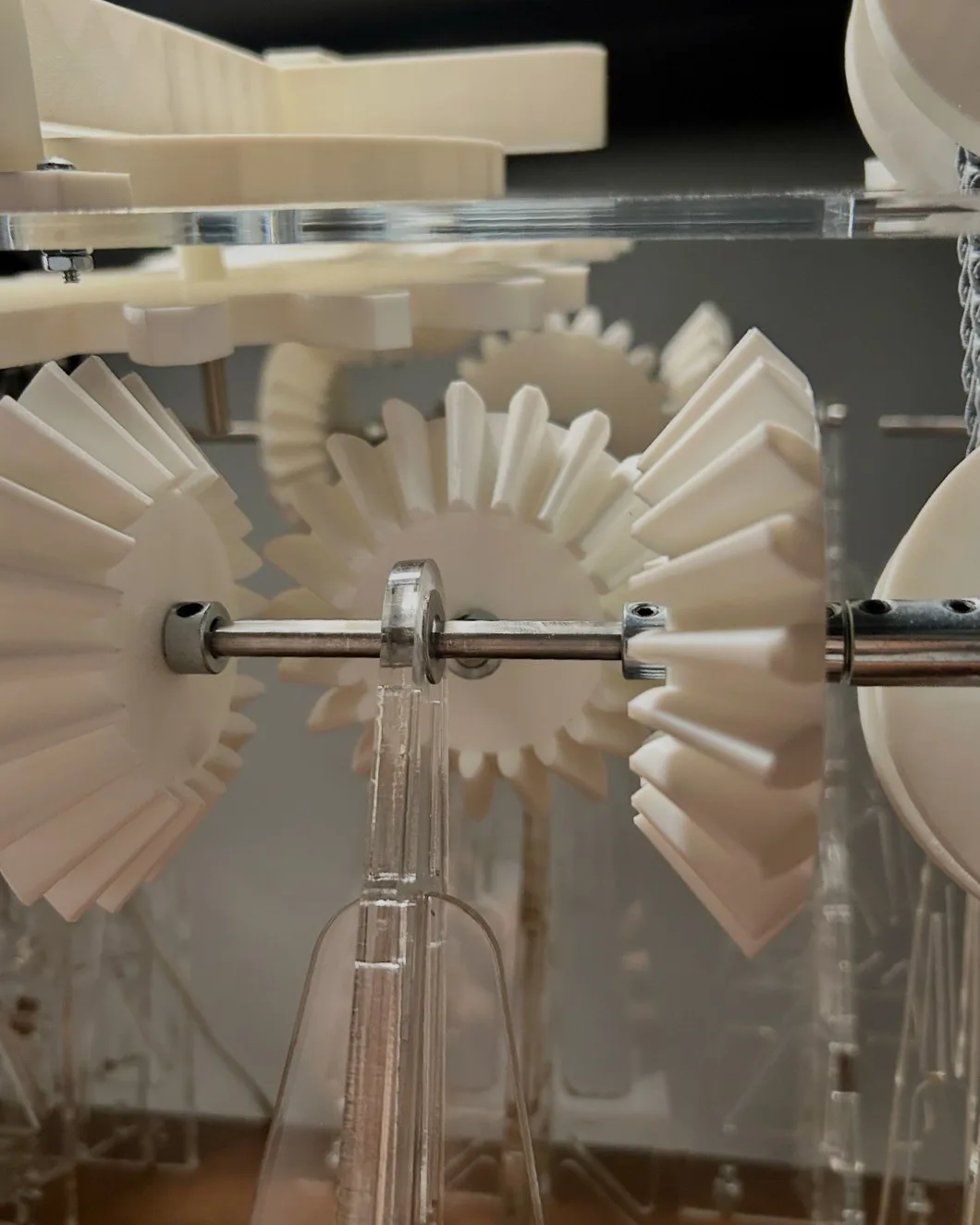
We ran four rounds of MEDGI (Mapping, Educing, Disrupting, Gestalting, Integrating) in sketches, then built a cardboard prototype and a wood-and-PLA critical mechanism. Free body diagrams traced force through the bevel gears and Scotch yoke, and FEA guided material removal from the frame and supports.
MEDGI sketching
Sketch rounds moved from a rotating photo cylinder to a film strip revealed behind a lifting door.
Prototyping
A cardboard model, then a wood-and-PLA mechanism, tested the film motion and the direction change.
FBD and FEA
Free body diagrams and FEA on the frame and supports guided material removal for the final build.
Outcome
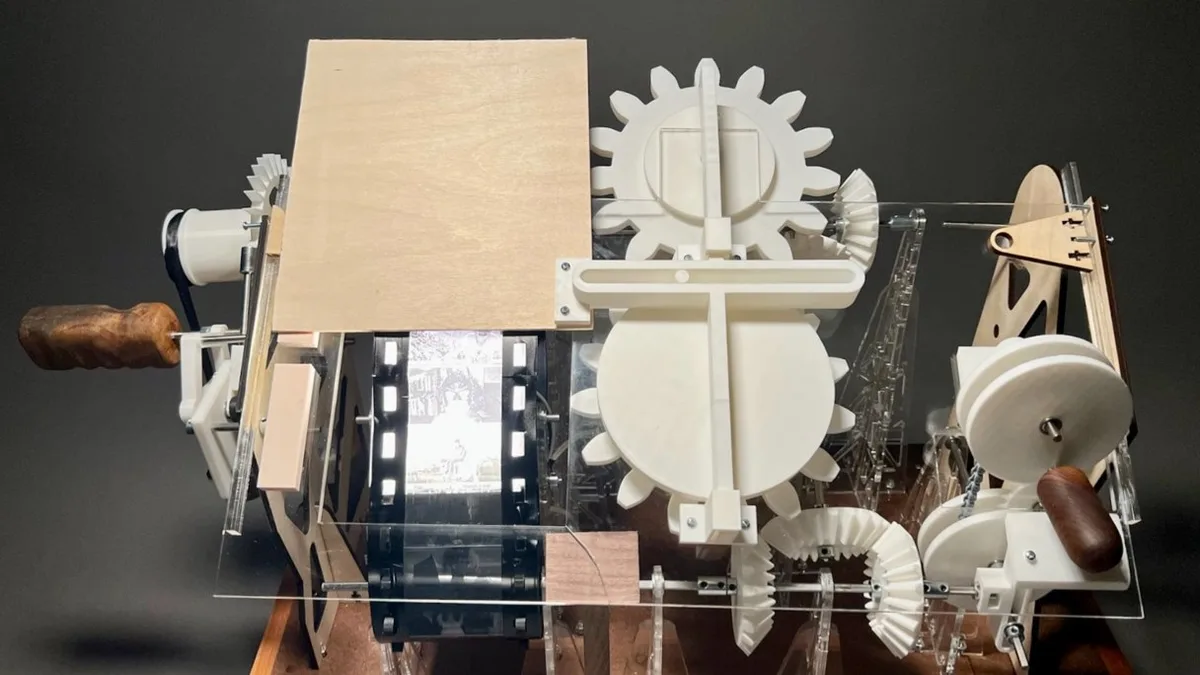
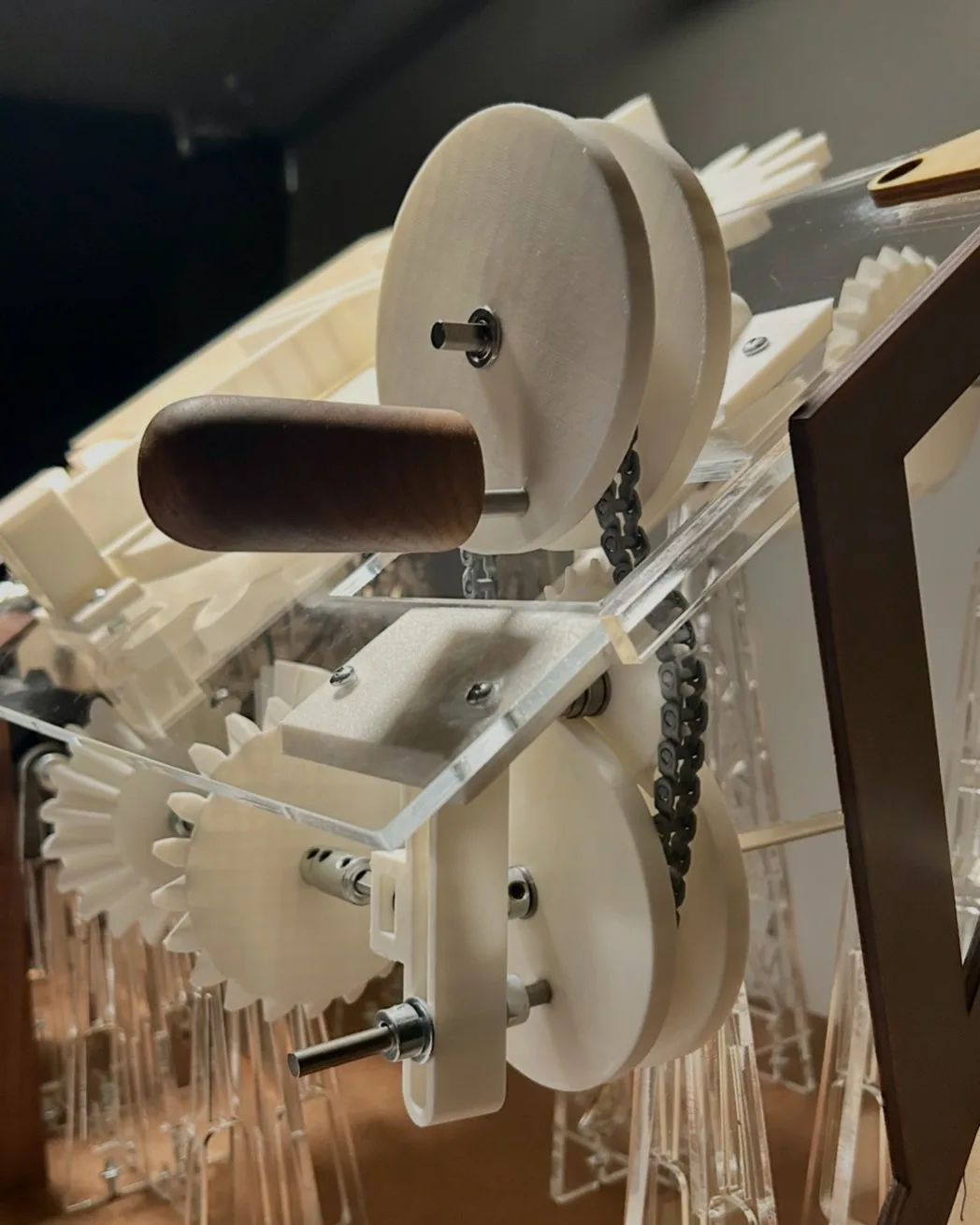
The final machine runs on a descending weight regulated by an escapement. A gear train and a chain on sprockets move the film past a light panel. A Scotch yoke reverses direction and gives the door its uneven rhythm: slow to open, quick to close. Time is read as images that surface and fade rather than as numbers.
4
MEDGI sketch rounds before the first build
2
Parts redesigned with FEA: frame and supports
Suspension Bridge